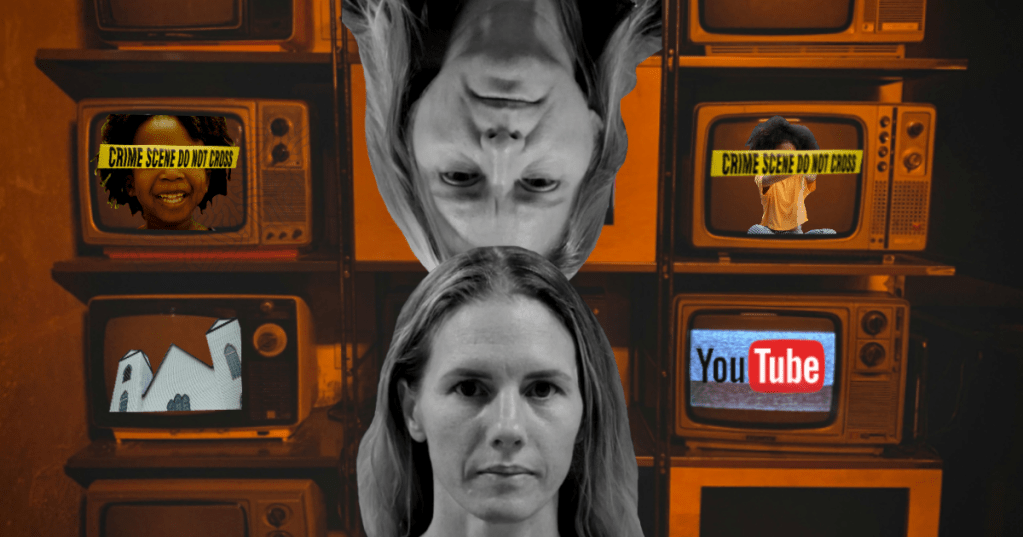
Netflix released its documentary Evil Influencer: The Jodi Hildebrandt Story, retelling and reintroducing the story of Jodi Hildebrandt and Ruby Franke to the world. Jodi Hildebrandt was a former therapist and relationship counselor in the LDS community. Ruby Franke was a former mom/family vlogger on YouTube for the channel 8-Passengers, which at its peak boasted over two million subscribers. Both are currently serving time at the Utah State Correctional Facility on multiple counts of child abuse after being arrested in 2023.
While the documentary is titled after Jodi Hildebrandt and Ruby Franke’s attempts to shift blame to Hildebrandt, Ruby Frank is and was no victim. For those of us who have found ourselves down the rabbit hole of the Ruby Franke story and the 8-passengers YouTube channel, there was clear evidence, prior to Jodi Hildebrandt’s arrival, that the Franke home was a place of hidden chaos. Subscribers petitioned Child Protective Services for wellness checks to intervene when YouTube videos began to take a darker turn. Nothing was done.
I want to take a moment to acknowledge the many circumstances that enabled child abuse to occur and persist. A rural community, steeped in religion. A faith known for its less-than-Godly ways. Members who have always toed the line between righteous discipline and criminal abuse. Manipulation. Obliviousness. An onslaught of viewers tuned in every release to watch, and checks clearing. I can recognize it all. But what makes this case like so many others, is the foundation of child abuse that is hidden in plain sight in the age of social media and kid influencers.
Child celebrities are not a new concept. Children have been in the public eye for as long as there has been money to be made from doing so. All the same, many of these child celebrities have been said to suffer abuse at the hands of the adults surrounding them. These experiences happen under and sometimes, at the hands of the parents who are supposed to protect them. Some of these child stars have been able to tell their stories. Documentaries like “Quiet on Set,” books like “I’m Glad My Mom Died” by Jenette McCurdy and “The House of My Mother: A Daughter’s Quest for Freedom” by Shari Franke, daughter of Ruby Franke, make it clear that children in entertainment frequently endure traumatic experiences for fame and money.
As a parent, I can appreciate the child-centered and star content. My daughter should be able to see herself in the media, just as I. And still, in a space where even adults struggle to protect themselves, I struggle to consider how we can ethically produce such content. I watch childhood stars become adults with glaring evidence of mental instability , fighting personal demons from their experiences. From Justin Bieber to Orlando Brown. Alyson Stoner to Amanda Bynes. I’ve had to sit through the discomfort of watching toddlers (Ms. Shirley) on tours with adult audiences taking pictures. Little boys dressed like YNs, with women swooning. Wondered in quiet what assurances are in place to ensure that, long after these moments pass, the children will be financially set and emotionally supported. It’s a jarring experience.
My daughter has been begging to start a YouTube channel since she was around seven years old. As she nears the age of twelve, I still can’t quite allow her to dive into the deep end of social media and content creation. I oscillate between questioning if my fears are limiting her and my reminding myself that it is my duty first and foremost to protect her, especially as a Black girl. And sure, there is a chance nothing comes of it, but there is also the chance it does. In truth, I wholeheartedly believe she can succeed. But the fear of her being plastered across social media for anyone to find and see terrifies me.
I appreciate the parents and platforms of child celebrities for the representation and child-friendly content. Simultaneously, I am extremely critical of family content that is heavily centered around minor children. The kids seldom, if ever, get to choose this path with a full understanding of the impact. They cannot directly access the funds generated because of age restrictions. Laws have not been established globally and consistently to ensure their safety. Simply put, I do not know if there is any ethical way to utilize children in the unregulated landscape of social media content. Unfortunately, Ruby Franke is just another story in the mine of victimized children for fame and money’s sake. Fortunately, these children were saved. Unfortunately they will never be the same. And worse yet there will likely be others.
 LeChell Rush